Repetitive Transcranial Magnetic Stimulation (rTMS): A Treatment Option For Depression You Should Know About
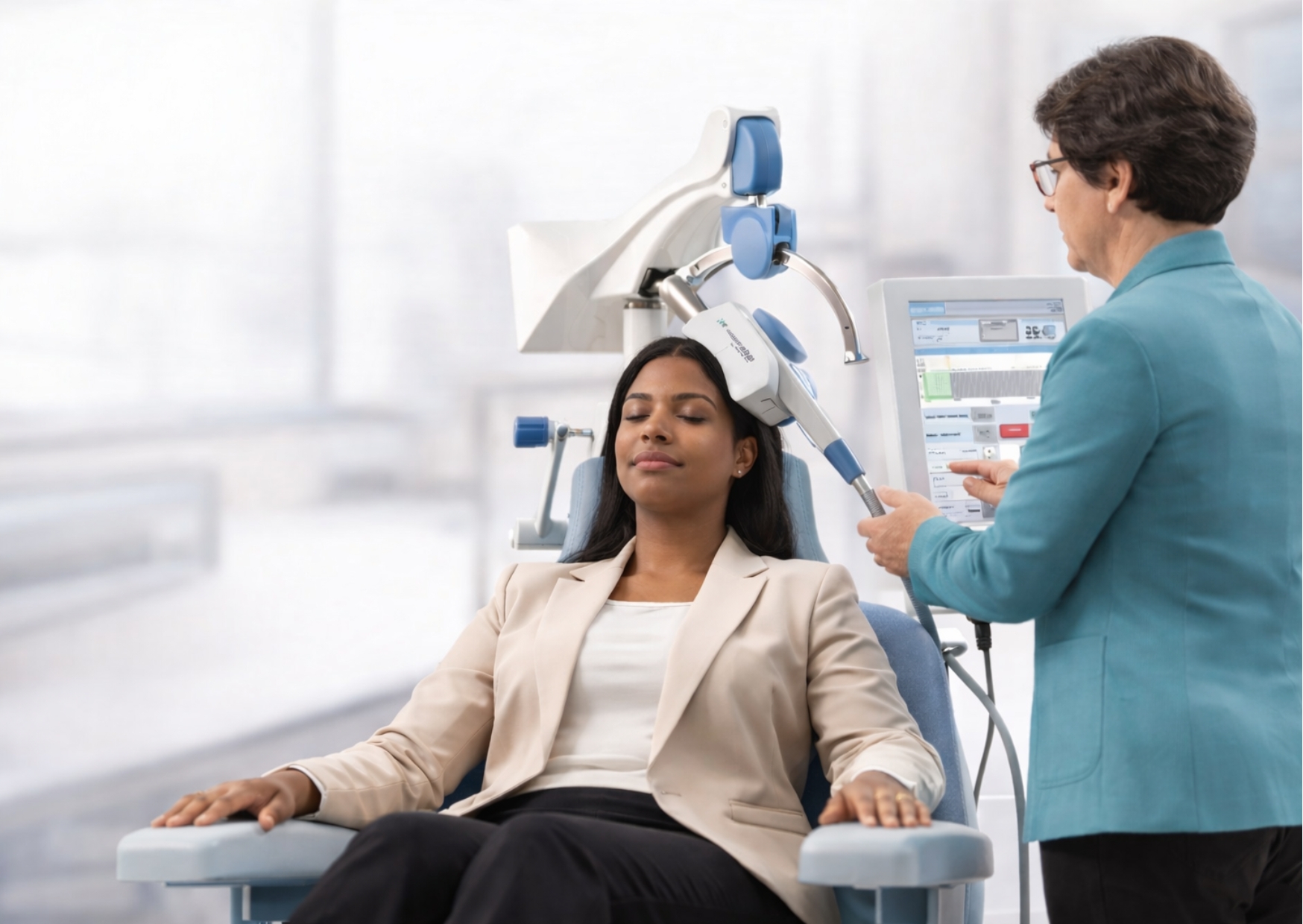
Many people have never heard of rTMS, yet it has become an established treatment option in modern psychiatry. It offers a non-invasive way of influencing brain circuits involved in mood and emotional regulation. It is normally used alongside medication and psychotherapy.
Why rTMS Fits With Modern Understanding of Mental Illness
We no longer think of mental illness as simply a “chemical imbalance.” Conditions such as depression and trauma-related disorders involve changes in how different brain networks function and communicate. These networks are shaped over time by genetics, stress, development, relationships, and life experiences. (Insel et al., 2010; Kupfer, Frank & Phillips, 2012).
In depression, research consistently shows altered functioning in circuits linking the prefrontal cortex (involved in planning, perspective, and regulation) and deeper emotional centres. rTMS most commonly targets part of the prefrontal cortex.
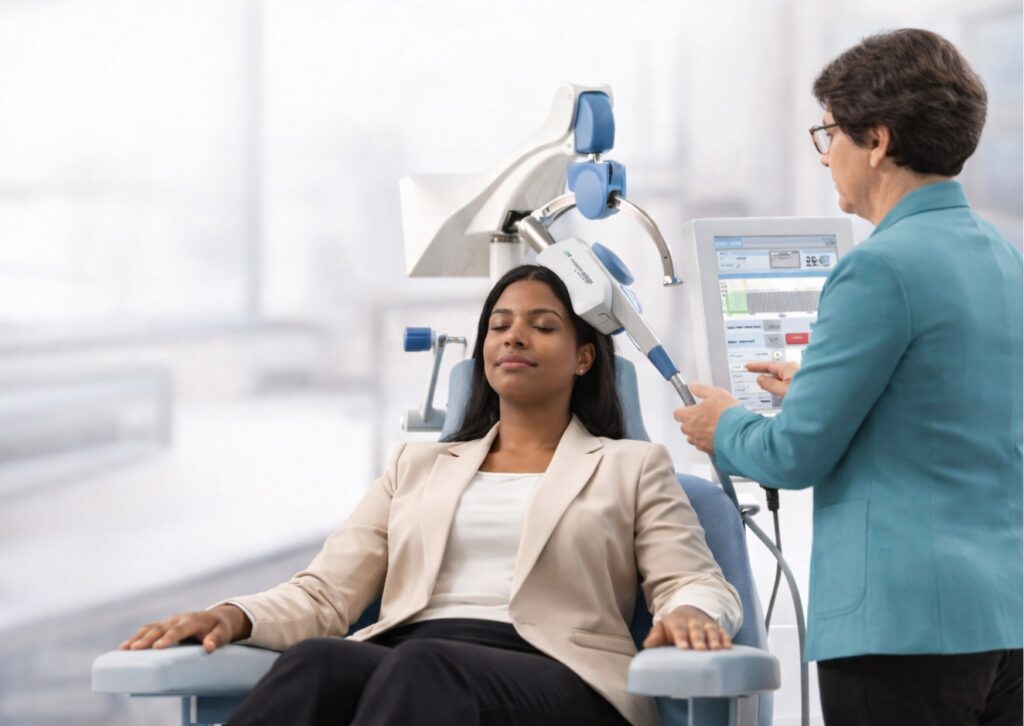
Through repeated magnetic pulses delivered over a number of sessions, rTMS is thought to modulate activity in these networks. While the precise mechanisms are still being studied, clinical evidence shows that it can reduce depressive symptoms in some individuals — particularly when other treatments have not been sufficient.
Many patients describe feeling more emotionally steady or less “stuck,” though experiences vary.
How rTMS May Support Therapy
Modern psychotherapies — including CBT, DBT, ACT, trauma-focused therapies, and attachment-based approaches — all rely on the brain’s capacity for learning, integration, and emotional regulation. Some consider them as actively reshaping neural responses through skills, relational experience, and repeated practice.
When mood regulation improves, some people find they are better able to:
- Engage in health promoting thought patterns and behaviours
- Use therapeutic skills more consistently
- Tolerate emotionally difficult material
- Pause before reacting
rTMS does not replace psychotherapy, but in some cases it may create conditions that make therapy more accessible or effective.
Who rTMS Is Commonly Considered For
rTMS is most commonly offered to people with major depressive disorder who:
- Have had an incomplete response to medication
- Have difficulty tolerating medication side effects
- Continue to experience significant impairment despite appropriate treatment
It is supported by South African and international guidelines as an option for treatment-resistant depression (SASOP Position Statement, McClintock, et., 2019; NICE, 2022). Its use in other conditions is an area of ongoing research and specialist consideration.
What rTMS Can — and Cannot — Do
rTMS may:
- Reduce depressive symptoms
- Improve emotional regulation
- Enhance cognitive flexibility
rTMS does not:
- Resolve trauma or long-standing relational patterns on its own
- Replace psychotherapy or medication
- Work for every individual
Its role is best understood as part of a comprehensive treatment plan.
Should You Consider It?
rTMS is not a first-line treatment and is not appropriate for everyone. It may be worth discussing with your psychiatrist if you have engaged meaningfully in treatment but continue to experience significant depressive symptoms.
A careful assessment of your diagnosis, treatment history, and goals is essential before deciding whether rTMS has a role in your care.
If you would like to explore treatment options, speak to your GP or psychiatrist for an individual evaluation.