
Why Going Flat-Out Can Backfire in Bipolar Disorder – and What Helps Instead
Many people living with bipolar disorder know this pattern well: long stretches of low energy, slowed thinking, or difficulty getting started — followed by a burst of momentum where everything finally feels possible again. When that energy arrives, it can feel precious and fragile. Stopping feels risky. Rest can feel like the last thing you want to do.

Understandably, many people push hard during these “good” periods. Work late, say yes to everything, catch up on what was missed. But over time, this boom-and-bust cycle often contributes to mood instability, exhaustion, and relapse, because the brain in bipolar disorder is particularly sensitive to changes in rhythm.
This is where social rhythm therapy (SRT) and pacing can be helpful.
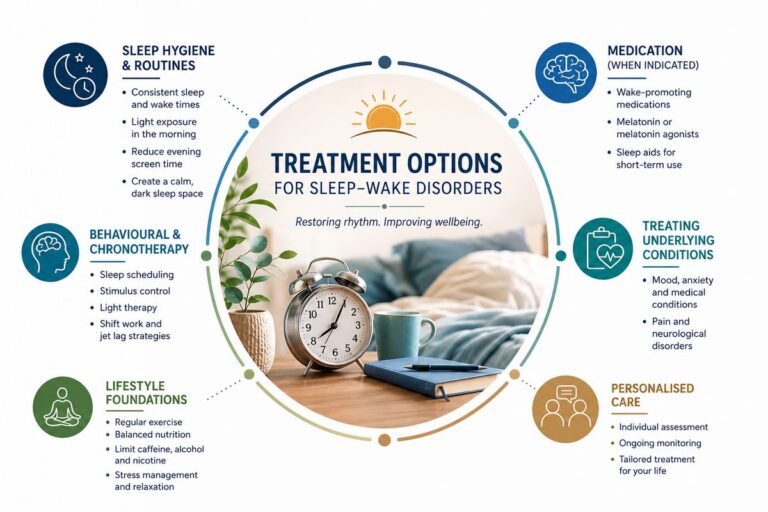
Social rhythm therapy is not about slowing you down unnecessarily or dulling your drive. Instead, it focuses on protecting regular daily rhythms — especially sleep, wake time, meals, activity, and social contact — because these rhythms help stabilise the brain systems that regulate mood.
When activity becomes intense and irregular, even if it feels positive, it can disrupt sleep and circadian rhythms. For some people, this increases the risk of hypomania, mania, or a subsequent crash into depression.
Pacing offers a different way forward. Rather than “all or nothing,” it encourages consistent, sustainable effort — even during times of increased energy. This can feel counterintuitive, especially for those who struggle to get going most of the time. But paradoxically, stopping a little sooner can help energy last longer.
Helpful principles often include:
- Keeping sleep and wake times as consistent as possible, even on productive days
- Building in planned pauses rather than waiting for exhaustion
- Spreading tasks across days instead of compressing everything into one surge
- Noticing early signs that energy is tipping into overdrive
Importantly, this is not about suppressing creativity, ambition, or recovery. It is about protecting stability so that progress is not lost.
If you find yourself stuck in a repeated cycle of pushing hard, crashing, and starting over, this is something worth discussing with a mental health professional familiar with bipolar disorder and rhythm-based approaches.
If you need support in South Africa, you can contact the South African Depression and Anxiety Group (SADAG) at 0800 567 567 or visit their website for resources and referrals. If you are feeling unsafe or at risk, please seek urgent help through your nearest emergency service or a crisis line.